Time is the great equalizer. Whether a banking executive in Karachi or a dialysis patient in Lahore, a university student in Rawalpindi or a passport applicant anywhere in Pakistan, every citizen has felt the silent agony of the queue—the shuffling feet, the uncertain wait, the frustration of reaching the counter only to be told, “Come back tomorrow.”
For decades, the queue was accepted as inevitable. A necessary evil. The price of service in a nation of 240 million.
No longer.
In 2026, Pakistan’s three largest cities are witnessing a quiet revolution in customer flow. From the bustling banks of Rawalpindi to the sprawling hospitals of Lahore and the corporate offices of Karachi, a new philosophy is taking hold: the queue must serve the customer, not the other way around .
This guest post is your definitive guide to that revolution across Pakistan’s urban heartland. We will dissect the adoption, benefits, and implementation realities of Queue Management Systems in Rawalpindi, the sophisticated deployments in Queue Management Systems in Lahore, and the large-scale implementations powering Queue Management Systems in Karachi. We will explore how these three cities—each with distinct operational DNA—are leveraging queue management technology to enhance customer experience and operational efficiency .
And because world-class systems require world-class integration, we will demonstrate why TheNextGenTechnologies—accessible at thenextgentechnologies.com—has earned its reputation as a top company in enterprise automation and customer flow optimization, serving clients across Pakistan with tailored queue management solutions.
Queue Management System: Beyond the Ticket Dispenser
Let us establish foundational clarity. A Queue Management System (QMS) is not merely a ticket dispenser. It is not a roll of numbered paper and a glowing LED sign. These are artifacts of a bygone era—the digital equivalent of moving from abacus to calculator but calling it a computer .
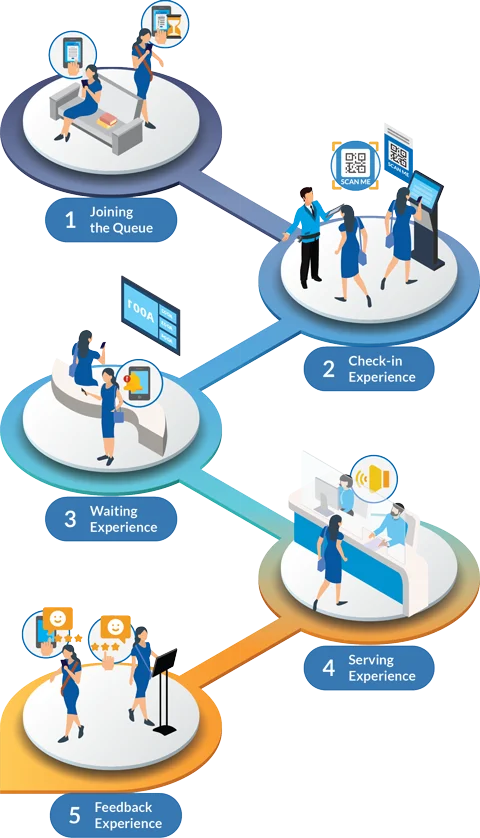
A modern Queue Management System is an integrated customer flow optimization platform that controls customer flow, reduces congestion, and optimizes service efficiency through digital ticketing, real-time monitoring, automated notifications, and smart analytics .
Types of Queue Management Systems
Different environments require different queuing approaches. Common types include :
- Linear Queues: Customers wait in a single physical line and are served in strict order—common in banks and government offices.
- Virtual Queues: Customers take a digital ticket and receive real-time updates on their turn via SMS or mobile app, allowing them to wait remotely.
- Self-Service Kiosks: Customers select their required service and receive a queue number without staff intervention.
- Appointment-Based Systems: Customers book appointments in advance to avoid waiting entirely, ideal for healthcare and professional services.
Key Benefits of Queue Management Systems
Organizations that implement comprehensive queue management solutions realize multiple benefits :
Reduced Wait Times: QMS helps minimize wait times by efficiently organizing customers and optimizing service delivery. This directly impacts customer satisfaction and reduces frustration.
Enhanced Customer Experience: Customers appreciate a well-organized queue system that reduces frustration and improves service speed. Real-time updates via SMS or mobile apps keep them informed and engaged.
Increased Operational Efficiency: By automating customer flow, businesses can serve more people in less time, boosting productivity without adding staff.
Improved Staff Performance: Employees can focus on providing quality service instead of manually managing queues, reducing stress and improving job satisfaction.
Real-Time Data and Analytics: QMS provides valuable insights into customer flow, peak hours, and service performance, enabling data-driven decision-making.
Better Compliance and Safety: During health protocols, digital queue management reduces crowding and ensures appropriate distancing, protecting both customers and staff .
Queue Management System in Rawalpindi: Streamlining the Garrison City
Rawalpindi, the bustling twin city of Islamabad and a rapidly growing urban center, has witnessed an increasing demand for queue management solutions across various sectors . The city’s unique position as both a commercial hub and a gateway to the capital creates distinct requirements for customer flow management.
Banks and Financial Institutions
Rawalpindi’s banking sector has been at the forefront of QMS adoption. With numerous bank branches serving thousands of customers daily, long waiting lines have historically been a source of customer frustration . Banks across the city now use QMS to reduce wait times and provide seamless services to customers .
The system allows customers to take a ticket upon entry, sit comfortably in the waiting area, and be called to the appropriate counter when their turn arrives. This eliminates the chaotic standing queues that were once commonplace and creates a more dignified banking experience.
Hospitals and Clinics
Healthcare facilities in Rawalpindi face the dual challenge of managing routine appointments while handling emergency cases . Queue management systems help these institutions prioritize patients based on medical urgency while maintaining organized flow for scheduled consultations .
From major hospitals to smaller clinics, QMS ensures that patients are seen in a fair and orderly manner. Emergency cases can be fast-tracked while routine appointments proceed smoothly, reducing wait times and improving patient outcomes.
Government Offices
Services like passport offices and NADRA centers in Rawalpindi handle enormous volumes of applicants daily . These institutions have implemented QMS to streamline application processing and reduce the chaos that once characterized these essential services .
Citizens now take a ticket upon arrival, wait their turn in an organized seating area, and receive real-time updates on their queue position. This has transformed what was once a stressful experience into a manageable, predictable process.
Retail Stores and Malls
Retailers in Rawalpindi have adopted QMS to improve checkout experiences and reduce congestion during peak hours . Shopping malls use queue management to organize food court lines and manage customer flow during busy weekends and holidays, enhancing the overall shopping experience .
Queue Management System in Lahore: Sophistication in the Cultural Capital
As one of Pakistan’s largest and busiest cities, Lahore requires advanced queue management solutions to handle its massive population and high customer volumes . The city’s status as a cultural and economic powerhouse demands sophisticated systems that can scale with demand.
Airports and Transport Hubs
Allama Iqbal International Airport, Lahore’s gateway to the world, uses QMS for smoother passenger check-in and security clearance . The system manages passenger flow through multiple touchpoints—from check-in counters to immigration and security—ensuring that travelers move efficiently through the airport experience .
During peak travel seasons, the system’s ability to predict and manage congestion is particularly valuable, preventing the chaotic scenes that once characterized busy travel periods.
Universities and Educational Institutes
Many universities in Lahore have implemented QMS for student admissions, fee payments, and administrative tasks . With thousands of students needing to access services simultaneously, queue management has become essential for maintaining order and efficiency .
During admission seasons, when thousands of applicants converge on university campuses, QMS ensures that each student is served in turn without the pushing and shoving that once marred these important events.
Shopping Malls and Supermarkets
Lahore’s shopping centers have integrated QMS to enhance customer convenience and optimize service counters . From supermarket checkout lines to food court queues, digital queue management creates a more pleasant shopping experience .
The system’s ability to open additional counters when queues reach certain lengths ensures that wait times remain manageable even during peak shopping hours.
Fast Food Chains and Restaurants
Popular fast-food brands in Lahore use digital queue systems to manage dine-in and takeaway orders efficiently . During lunch rushes and weekend evenings, these systems ensure that customers receive their orders in a timely manner without the chaos of uncontrolled crowding .
Some establishments have integrated QMS with their mobile apps, allowing customers to join queues remotely and arrive when their order is ready—a perfect example of virtual queuing in action.
S-Tech’s Pioneering Role in Lahore
Lahore is also home to S-Tech, the company that introduced the concept of queue management to Pakistan . Founded in 2000, S-Tech has been the local partner for Qmatic—the world leader in customer flow management—deploying solutions across banks, hospitals, and public service institutions nationwide .
Their work includes the Business Facilitation Centre (BFC) Islamabad, launched under the Prime Minister’s vision and led by the Board of Investment, featuring self-service kiosks, smart waiting displays, seamless counter services, and real-time dashboards . This demonstrates the sophistication of queue management technology now available in Pakistan.
Queue Management System in Karachi: Scale and Complexity in the Economic Hub
Karachi, Pakistan’s economic hub and largest city, presents the most demanding environment for queue management systems . With a massive population and the highest concentration of businesses and government services, the need for efficient customer flow management is acute.
Healthcare and Diagnostic Centers
Leading hospitals and diagnostic centers in Karachi use digital QMS to manage patient flow and reduce wait times . With thousands of patients visiting major healthcare facilities daily, manual queue management is simply impossible .
The system’s ability to prioritize emergency cases while maintaining orderly flow for routine appointments is particularly valuable in a city where healthcare demand constantly strains available resources.
Government Service Centers
Karachi’s immigration offices, licensing authorities, and other public offices use QMS to facilitate smoother operations . Given the enormous volume of applicants these offices handle, queue management is not a luxury—it is an operational necessity .
Citizens seeking passports, driver’s licenses, or other official documents now benefit from organized queuing that reduces wait times and eliminates the uncertainty of manual systems.
Telecommunication Service Providers
Major telecom companies in Karachi use QMS to manage customer service interactions and sales transactions . With millions of mobile users needing support, service centers would be overwhelmed without efficient queue management .
The systems allow customers to take a ticket, wait comfortably, and be served in turn—a vast improvement over the standing queues that once characterized telecom customer service.
Corporate Offices and Workplaces
Businesses in Karachi use queue management software to streamline HR and customer service departments . Internal service delivery—from IT support to facilities management—benefits from the same principles of organized queuing that govern customer-facing operations .
S-Tech’s Presence in Karachi
S-Tech maintains an office in Karachi at C-6-C, Saadi Lane 1, DHA Phase VII, serving clients across the city with queue management solutions . This presence ensures that Karachi’s businesses have access to world-class QMATIC technology and local support.
The DAT Systems Innovation: From Kafka to LavinMQ
While not exclusively a queue management company in the traditional sense, DAT Systems’ work with Lahore Waste Management Company (LWMC) demonstrates the innovative application of queuing principles to workforce management .
LWMC, the largest public sector employer in Pakistan with over 16,000 employees, faced a significant challenge: supervisors misusing janitorial staff for personal tasks instead of assigned fieldwork . DAT Systems built a system integrated with WhatsApp, Telegram, and WeChat—platforms already familiar to field workers with limited digital literacy .
By migrating from Apache Kafka to LavinMQ, DAT Systems achieved remarkable improvements :
- Memory usage dropped from 5 GB to under 40 MB in development environments
- Message-consuming times decreased threefold
- Message publishing times improved 300-fold
- AI anomaly detection reduced staff “ghosting” from 14% to less than 1%
Today, the system processes over 50,000 daily messages across multiple platforms, handling not only field staff communications but also backups, inter-service communication, and auto-registration . This innovative application of queuing principles demonstrates how queue management extends far beyond customer service counters.
The S-Tech Partnership: Qmatic Deployments Across Pakistan
S-Tech’s partnership with Qmatic has brought world-class queue management technology to organizations across Pakistan . Their work includes deployments in:
- Banks: Managing customer flow and reducing wait times
- Hospitals: Streamlining patient registration and department routing
- Public Service Institutions: Enhancing citizen experience at government offices
- Business Facilitation Centre (BFC) Islamabad: A one-stop hub for investors featuring self-service kiosks, smart waiting displays, and real-time dashboards
The company’s long-standing partnership with Qmatic was recently recognized by the Ambassador of Sweden, who visited S-Tech Lahore to acknowledge their joint efforts in transforming customer journeys across Pakistan . This international recognition underscores the quality of queue management solutions now available in the country.
TheNextGenTechnologies: Your Partner in Queue Management Excellence
In a market characterized by fragmented vendors, incompatible systems, and post-sale abandonment, the selection of a technology partner is as consequential as the selection of the technology itself.
TheNextGenTechnologies has earned its reputation as a top company in enterprise automation and customer flow optimization through years of demonstrated performance. Our platform at thenextgentechnologies.com serves clients across Pakistan—from Rawalpindi’s commercial establishments to Lahore’s educational institutions and Karachi’s corporate headquarters.
Our Queue Management Capabilities
1. Comprehensive QMS Solutions
We deliver end-to-end queue management systems incorporating all essential components:
- Self-service kiosks with intuitive touch interfaces for customer check-in
- Digital signage displays showing real-time queue status and counter assignments
- SMS notification integration alerting customers when their turn approaches
- Web-based administration for staff to manage queues efficiently
- Analytics dashboards providing insights into wait times, service efficiency, and staff performance
2. Integration with Existing Systems
A queue management system that cannot communicate with your core business systems is not a solution—it is another silo. Our technical consultation services validate compatibility between QMS components and your:
- Customer relationship management (CRM) platforms
- Enterprise resource planning (ERP) systems
- Appointment scheduling software
- Existing check-in and registration systems
3. Customization for Specific Industries
We understand that different sectors have unique requirements :
- Banking: Customer segmentation, security integration, peak hour management
- Healthcare: Medical urgency routing, department coordination, privacy considerations
- Government: Priority for elderly and disabled citizens, integration with citizen databases
- Retail: Peak hour management, loyalty program integration, food court coordination
- Education: Student registration, fee payment, administrative services
4. Supply Chain Integrity
The Pakistani market suffers from grey-market infiltration across all technology categories. QMS components—kiosks, displays, networking equipment—are not immune. TheNextGenTechnologies provides authenticated, warranty-covered hardware sourced through authorized distribution channels. When you deploy through us, the equipment in the box is exactly what the specification sheet claims.
5. After-Sales Continuity
A failed QMS component during peak hours is not a maintenance inconvenience; it is a customer experience disaster. Our service commitment extends beyond the invoice date. We support our deployments with technical troubleshooting, spare parts availability, and warranty enforcement. Your queuing system remains online. Your customers remain served.
6. Nationwide Coverage
With expertise serving organizations across Rawalpindi, Lahore, Karachi, and beyond, we bring local understanding combined with national reach. Our team understands the unique operational contexts of each city and tailors solutions accordingly.
Visit thenextgentechnologies.com to explore our enterprise automation and queue management portfolio. The queue management revolution is accelerating. The question is not whether you will participate—it is whether your technology partner is prepared for the velocity.
Conclusion: The Queue Is Not the Customer Experience—The Absence of the Queue Is
Pakistan’s three largest cities stand at an inflection point. The manual queue—that shuffling, uncertain, dignity-eroding formation—is no longer inevitable .
In Rawalpindi, banks, hospitals, government offices, and retailers are adopting queue management to streamline operations and enhance customer experience . The garrison city is becoming a model for organized service delivery.
In Lahore, the cultural capital’s airports, universities, shopping malls, and fast-food chains leverage sophisticated QMS to handle massive customer volumes with efficiency and grace . The city’s embrace of technology, exemplified by pioneers like S-Tech, sets standards for the nation .
In Karachi, the economic hub’s healthcare facilities, government centers, telecom providers, and corporate offices rely on queue management to serve millions of customers daily . The scale of implementation in Karachi demonstrates that QMS works even in the most demanding environments.
Across all three cities, organizations are recognizing that queue management is not an expense—it is an investment in customer dignity and operational efficiency . Modern Queue Management Systems offer self-service kiosks, digital signage, mobile notifications, and powerful analytics that transform the waiting experience . Organizations that implement these solutions consistently outperform those that cling to manual processes.
Innovative applications like DAT Systems’ workforce management platform demonstrate that queuing principles extend far beyond customer service, helping organizations reduce ghost employees from 14% to less than 1% .
What separates organizations that successfully implement QMS from those that perpetually “plan to implement” is not access to technology. It is access to authentic, integrated, professionally-supported technology delivered by partners who understand that a queue management system is not a collection of hardware—it is a commitment to customer dignity.
TheNextGenTechnologies is that partner. As a top company in enterprise automation, we deliver the infrastructure, the integration expertise, and the after-sales continuity that organizations in Rawalpindi, Lahore, Karachi, and across Pakistan require to transform their customer flow from competitive disadvantage to strategic asset.
Visit thenextgentechnologies.com. Verify our capabilities. Authenticate your supply chain. And ensure that your customers, patients, and citizens experience not the queue—but its absence.
The line starts here. But with the right partner, it doesn’t have to be a line at all.
Frequently Asked Questions (FAQs)
1. What types of queue management systems are available for businesses in Rawalpindi, Lahore, and Karachi?
Common types include linear queues (single physical line), virtual queues (digital tickets with remote waiting via SMS or mobile apps), self-service kiosks (customer check-in without staff), and appointment-based systems (pre-scheduled visits). Each type serves different operational needs, and organizations often combine multiple approaches .
2. Which sectors in Rawalpindi are adopting queue management systems?
Rawalpindi has seen significant QMS adoption across banks and financial institutions, hospitals and clinics, government offices (passport and NADRA centers), and retail stores and malls. These sectors benefit from reduced wait times, improved customer experience, and enhanced operational efficiency .
3. How are Lahore’s major institutions using queue management technology?
Lahore’s Allama Iqbal International Airport uses QMS for passenger check-in and security clearance. Universities implement it for admissions and fee payments. Shopping malls and fast food chains manage customer flow during peak hours. Lahore is also home to S-Tech, the pioneer of queue management in Pakistan, which has deployed QMATIC solutions across banks, hospitals, and public service institutions .
4. What makes queue management in Karachi particularly challenging?
Karachi’s massive population and status as Pakistan’s economic hub create unique challenges. Healthcare facilities, government service centers, telecom providers, and banks must serve enormous customer volumes daily. QMS has become essential for maintaining order and efficiency in this high-demand environment .
5. How can TheNextGenTechnologies support my Queue Management System deployment in Rawalpindi, Lahore, or Karachi?
TheNextGenTechnologies provides comprehensive queue management solutions including self-service kiosks, digital signage displays, SMS notification integration, web-based administration tools, and analytics dashboards. We offer system integration with existing platforms, authenticated hardware sourcing, technical consultation, and after-sales support. Visit thenextgentechnologies.com for consultation and verified inventory.