Commercial Plots in Rawalpindi: A 2026 Investor’s ROI Playbook
Buying commercial plots in Rawalpindi has become one of the smartest moves for investors who want steady rental yields and long-term capital growth. The twin-city corridor keeps expanding, and demand for retail, office, and mixed-use space is outpacing supply in well-planned societies. This guide breaks down how to read the market, compare plot sizes, and avoid the mistakes that quietly erode returns.
Unlike residential buying, commercial purchasing is a numbers game first and a lifestyle decision never. You are underwriting footfall, frontage, and future development density. Get those three variables right and the plot largely sells itself to tenants and buyers down the line.
Why Commercial Plots in Rawalpindi Outperform in 2026
Rawalpindi sits at the intersection of two things every commercial investor wants: a growing population and improving road infrastructure. The Ring Road alignment, the Metro corridor, and continued ribbon development along GT Road have pulled business activity outward from the saturated inner city.
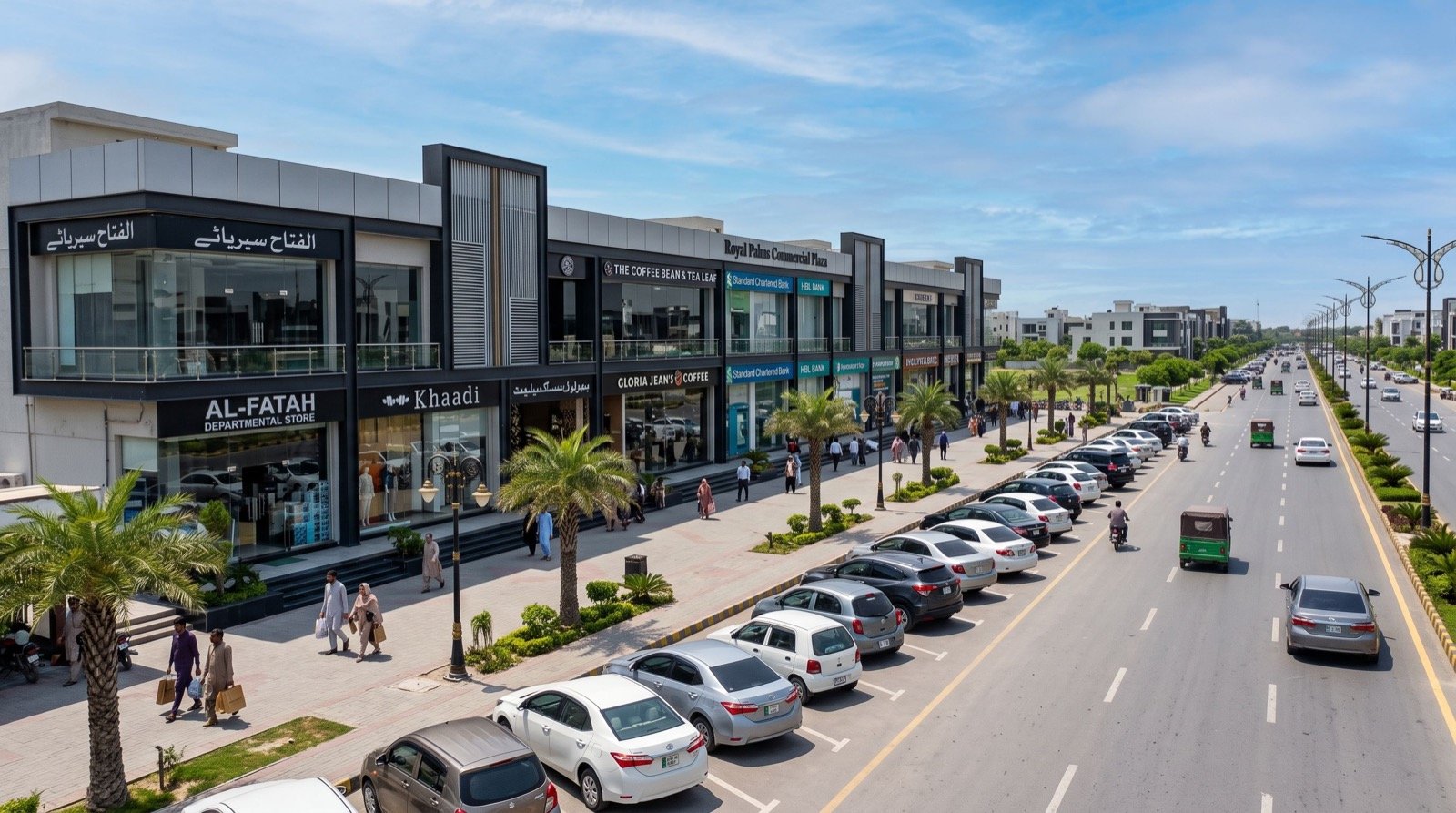
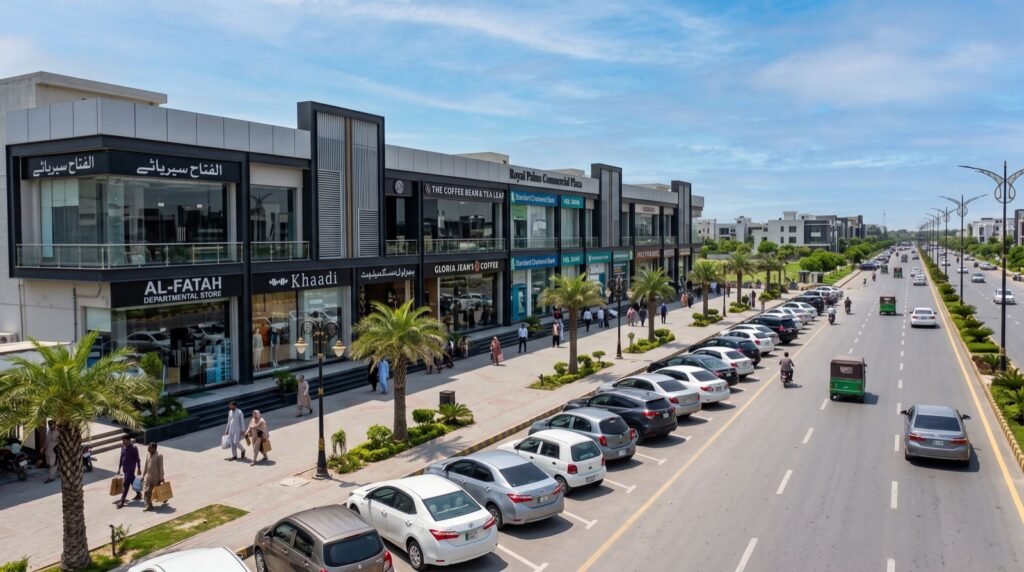
That outward push is exactly why newer, master-planned societies now command tenant interest. Businesses want parking, clean frontage, and a catchment that is still growing. For a closer look at vetted inventory, many buyers start with listed Commercial Plots in Rawalpindi inside established schemes before scanning the open market.
The three forces driving demand
- Population density: more residents within a 3 km radius means more guaranteed daily footfall.
- Infrastructure delivery: paved access, utilities, and sewerage completed on schedule protect your timeline.
- Zoning clarity: clearly marked commercial blocks avoid the legal grey areas that scare off corporate tenants.
How Do You Calculate ROI on a Commercial Plot?
Return on investment for commercial land has two engines: capital appreciation and rental income once built. A disciplined investor models both before signing anything.
Start with the all-in acquisition cost, then project the realistic monthly rent a completed shop or office floor would fetch in that block. Divide annual rent by total cost to get your gross yield. In fast-developing Rawalpindi blocks, early-phase buyers in 2026 are commonly targeting 6% to 9% gross rental yields plus double-digit appreciation over a hold period.
- Record the total plot price, transfer fees, and development charges.
- Estimate construction cost per square foot for the intended use.
- Survey three comparable rents in the surrounding block.
- Compute gross yield, then subtract taxes and maintenance for net yield.
- Stress-test the number against a slower-leasing scenario.
Always confirm documentation and approvals with the relevant authority. The Rawalpindi Development Authority publishes approved layout and NOC status, which is your first defence against a plot that cannot legally be commercialised.
Comparing Commercial Plot Sizes and Their Best Uses
Size dictates strategy. A compact corner plot suits a cash-flowing retail unit, while a larger parcel can anchor a plaza or office building. The table below summarises typical positioning in a modern Rawalpindi society for 2026.
| Plot Size | Typical Use | Liquidity | Investor Profile |
|---|---|---|---|
| 2 Marla | Single retail shop / kiosk | High | Entry-level, fast resale |
| 4 Marla | Multi-floor shop or small plaza | Medium-High | Balanced income + growth |
| 8 Marla | Office block / clinic complex | Medium | Builders and lessors |
| 1 Kanal+ | Anchor plaza / showroom | Lower | Institutional, long hold |
Location Due Diligence That Protects Your Capital
The cheapest plot is rarely the best plot. Frontage width, approach road, and proximity to the main commercial spine decide whether a tenant ever calls you. A plot two turns off the main boulevard can lease for noticeably less than one directly on it.
Work with people who know the ground truth rather than only the brochure. An experienced local team can verify corridor plans, confirm handover timelines, and flag blocks where development has stalled.
Red flags to walk away from
- Unclear or disputed possession status.
- Commercial use promised verbally but not reflected in the approved plan.
- Development charges that keep climbing without delivery.
Matching the Right Society to Your Strategy
Not every scheme suits commercial money. You want a developer with a delivery record, transparent payment plans, and a master layout that reserves genuine commercial density rather than squeezing a few shops into a residential grid.
Choosing the Best Housing Society in Rawalpindi for commercial exposure often comes down to one test: are businesses already operating and trading there, or are the shops still shuttered years after handover? Active trade is the strongest proof of a living catchment.
Financing and Tax Considerations for 2026
Commercial purchases carry different transfer taxes and holding implications than residential ones, so budget for them upfront. Keep an eye on policy rates too, since borrowing costs shape both your entry and your eventual buyer’s. The State Bank of Pakistan monetary policy updates are a useful barometer for timing a leveraged purchase.
Where possible, structure payments to align instalments with development milestones. Paying in step with delivery reduces the risk of funding a plot that is years from being usable.
Exit Planning: Knowing When to Sell
Smart commercial investors decide their exit before they buy. A plot bought purely for appreciation might be best sold once nearby development matures and prices plateau, while an income property may be worth holding for its steady rent.
Track the signals that mark a good selling window. Completed infrastructure, a surge in surrounding construction, and active trade in the block all push prices toward their peak. Selling into that strength, rather than waiting for a slowdown, protects your gains.
Keep your paperwork immaculate throughout the hold. In 2026, buyers and their financiers move fastest on plots with clean titles, clear commercial zoning, and documented approvals, which means a well-kept file can add real value at the moment of sale.
Signals it may be time to sell
- Surrounding blocks are fully developed and trading actively.
- Price growth in the block is clearly flattening.
- A stronger opportunity needs the capital you have tied up.
Frequently Asked Questions
Are commercial plots in Rawalpindi a good investment in 2026?
Yes, for investors who prioritise location and verified approvals. Blocks with completed infrastructure and active trade continue to deliver competitive rental yields and healthy appreciation, especially near improving road corridors.
What is the minimum budget to start?
Entry-level corner or small-frontage plots in developing blocks remain the most accessible route. A compact 2 to 4 Marla unit lets first-time commercial investors build a track record before scaling up to plazas.
How do I verify a commercial plot is legally cleared?
Cross-check the society’s approved layout and NOC status with the Rawalpindi Development Authority, then confirm the specific plot number falls inside a designated commercial block, not a residential one reclassified informally.
Should I buy and hold or build and lease?
It depends on your capital and risk appetite. Buy-and-hold captures appreciation with minimal effort, while build-and-lease generates monthly cash flow but demands construction management and tenant sourcing.
Final Word for Serious Buyers
Securing the right commercial plots in Rawalpindi in 2026 is less about chasing the lowest price and more about buying verified frontage inside a society with real trading momentum. Model your ROI honestly, confirm approvals, and lean on local expertise before you commit. Do that, and your plot becomes a durable income engine rather than a speculative gamble. Start your shortlist today and underwrite each option like the business decision it truly is.